Xinergee | Managing Wealth Across Borders: Malaysia in the Multi-Jurisdiction Picture



A New Reality for Wealthy Malaysian Families
A growing number of wealthy Malaysian families now have members studying, working, and living in multiple countries — with assets spread across jurisdictions and family members holding different tax residency statuses. Wealth management has consequently become a profoundly cross-border discipline. This complexity is driving a structural shift in how family offices are designed — and it is precisely this shift that makes Malaysia’s new SFO Scheme a timely and relevant policy development.
Asia-Pacific family offices allocate 32% of their average portfolio to investments outside their home region, with over one in five planning to increase allocations to North America (23%) and the Middle East (21%). (Source: Deloitte, Family Office Insights Series – Asia Pacific Edition, 2024)
Source: Deloitte, Family Office Insights Series – Asia Pacific Edition, 2024
How Malaysia Compares: The Three-Hub Framework
For Malaysian families evaluating where to anchor their family office, the relevant comparison is between Malaysia’s Forest City Special Financial Zone, Singapore, and Hong Kong — the three primary family office jurisdictions in the region.
MALAYSIA — Forest City SFO Scheme
- 0% concessionary tax rate on investment income for 20 years (10 + 10 years, subject to conditions).
- Exemptions cover income, capital gains, foreign-sourced income, stamp duty, and dividends.
- Initial 10-year requirements: minimum AUM of RM30 million; at least 10% of AUM or RM10 million (whichever is lower) in eligible domestic investments; minimum annual OPEX of RM500,000; at least two full-time employees with a minimum monthly salary of RM10,000 each, one of whom must be a qualified investment professional.
- Subsequent 10-year requirements: AUM increases to a minimum of RM50 million; OPEX increases to RM650,000 annually (minimum 30% higher than the initial period); at least four full-time employees; enhanced local investment conditions apply.
- Two-step certification: initial Conditional Approval by the SC, followed by annual tax certification to confirm ongoing compliance.
- AUM Multiplier: Investments into Promoted Sectors — including NIMP 2030 priorities, the Johor-Singapore Special Economic Zone (JS-SEZ), equity crowdfunding, peer-to-peer financing, sustainability, and waqf-linked initiatives — receive a 1.5x multiplier in AUM calculations, incentivising capital deployment into Malaysia’s national development priorities.
- A dedicated visa track accompanies the SFO Scheme for both family principals and their investment professionals — an important practical consideration for international families establishing a Malaysian base.
- As of October 2025, the SC has granted Conditional Approval to six families with combined AUM of close to RM400 million. More than 30 Expressions of Interest have been received, with families from Malaysia, Singapore, Thailand, and beyond.
Source: Securities Commission Malaysia, Malaysia Gazettes Single Family Office Rules, October 2025
SINGAPORE — MAS Sections 13O and 13U
- Two schemes: Section 13O (for Singapore-incorporated or variable capital company funds, minimum AUM S$20 million — required at application AND maintained throughout the incentive period) and Section 13U (structure-agnostic, suitable for both onshore and offshore funds, minimum AUM S$50 million at application and maintained throughout).
- Both schemes extended to 31 December 2029. From January 2025, AUM is computed based on the value of Designated Investments (DI) only — excluding non-DI assets from the minimum threshold calculation.
- Annual local business spending (LBS) is tiered by AUM: a minimum of S$200,000 per year for funds under S$50 million; S$500,000 for funds between S$50 million and S$100 million; and S$1 million for funds above S$100 million. These tiers apply under both 13O and 13U, with eligible donations and grants to blended finance structures counting towards the requirement at a 2x multiplier.
- Employment: at least two investment professionals (13O), at least three (13U), with at least one non-family member in each.
- CDR (Concessionary Deployment Requirement): minimum 10% of AUM in specified local investments, including climate-related assets and blended finance structures.
- In July 2025, MAS committed to processing applications within three months — signalling continued focus on attracting quality capital while maintaining governance standards.
- Singapore hosts over 2,000 single-family offices as of end-2024, up from around 400 in 2020.
Source: MAS, Sections 13O & 13U framework; Waystone Compliance, MAS Circular FDD Cir 10/2024; ASEAN Briefing, 2025
HONG KONG — Family-Owned Investment Holding Vehicle (FIHV) Tax Concession
- 0% profits tax on qualifying transactions managed by eligible Single Family Offices in Hong Kong. Effective retrospectively from year of assessment 2022/23.
- No pre-approval required — family offices self-declare eligibility. Minimum substance: at least two qualified full-time employees in Hong Kong; minimum annual operating expenditure of HK$2 million.
- No capital gains tax, withholding tax on dividends, or sales/VAT in Hong Kong — making the effective tax burden among the lowest in Asia.
- 2025-26 Budget proposals expand qualifying transactions to include emission derivatives, insurance-linked securities, loans, private credit, and digital assets.
- As of mid-2025, approximately 2,700 family offices operate in Hong Kong, with 800 new applications since the tax concession launched. InvestHK’s FamilyOfficeHK team assisted 50 family offices to set up or expand in just the first five months of 2025.
Source: IRD Hong Kong, FIHV Tax Concession Regime; ZEDRA, Why Family Offices Choose Hong Kong, 2025; Legislative Council written reply, July 2025
Which Jurisdiction Is Right for You?
Each jurisdiction offers a distinct value proposition, and the right choice depends on a family’s specific circumstances — including asset size, existing legal structures, family members’ residency, and long-term wealth goals.
From an advisory perspective, Malaysia’s Forest City SFO Scheme is particularly relevant for: Malaysian families looking to formalise wealth management domestically; families with moderate AUM (RM30 million and above) seeking a 0% tax framework with accessible entry requirements; and regional families seeking a cost-efficient base with proximity to Singapore and the broader ASEAN market.
Singapore offers the most mature family office ecosystem in the region — with over 2,000 SFOs, deep professional talent, a robust regulatory framework, and a decades-long track record — making it well-suited for larger family offices with global portfolios. Hong Kong remains an attractive base for families with mainland China connections, Northeast Asian investment interests, and exposure to international capital markets.
▌ CASE STUDY
The Rockefeller family — whose patriarch John D. Rockefeller built one of the largest private fortunes in American history through Standard Oil in the late 19th century and is widely credited as among the earliest pioneers of formalised private wealth management — today manages wealth through a sophisticated multi-jurisdiction structure spanning the United States, Europe, and key international markets. What began as a dedicated wealth management office in the late 1800s has evolved into a full-service wealth management institution, Rockefeller Capital Management, that adapts its structure as family members’ geographic and tax situations change. For wealthy Malaysian families, this model carries a clear lesson: the initial jurisdiction choice should be made with long-term flexibility in mind, and the governance structures built today will shape how wealth is managed for generations to come. (Source: Altrata, Global Family Offices and the Economics of Legacy, 2024)
Source: Altrata, Global Family Offices and the Economics of Legacy, 2024
Advisory Perspective: Multi-jurisdiction strategies should be built on long-term structural soundness. Malaysian families should not view the Forest City SFO Scheme in isolation — rather, it should be assessed as part of a broader wealth architecture that considers Singapore and Hong Kong as complementary options depending on family needs. Qualified advisors in each jurisdiction should be engaged before any structuring decision is made.
Outlook: As wealthy Malaysian families continue to build global lives and businesses, multi-jurisdiction wealth management will become the norm rather than the exception. The launch of Malaysia’s SFO Scheme positions the country to play a meaningful role in this ecosystem — complementing, rather than competing with, the more established hubs of Singapore and Hong Kong.
Author Positioning
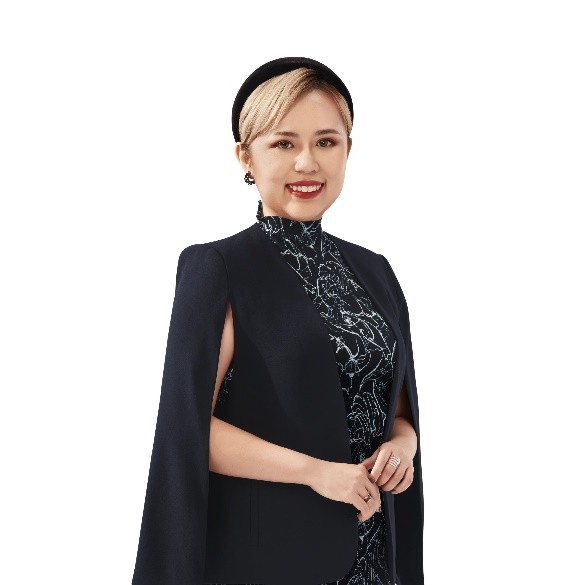
CEO of Xinergee
Certified Family Office Advisor by Wealth Management Institute, Singapore
British Chamber of Commerce member
Email: evonne@xinergee.com or yeevon09@gmail.com
Website: https://xinergee.com/
Evonne Lim is a Malaysia-based family office advisor specialising in wealth structuring, governance advisory, and intergenerational planning for ultra-high-net-worth families. Her work focuses on helping families navigate the evolving family office landscape across Malaysia and Asia, particularly in areas of succession planning, risk management, and long-term wealth preservation.