Nuclear Energy Roundtable: Strengthening UK-Malaysia Dialogue

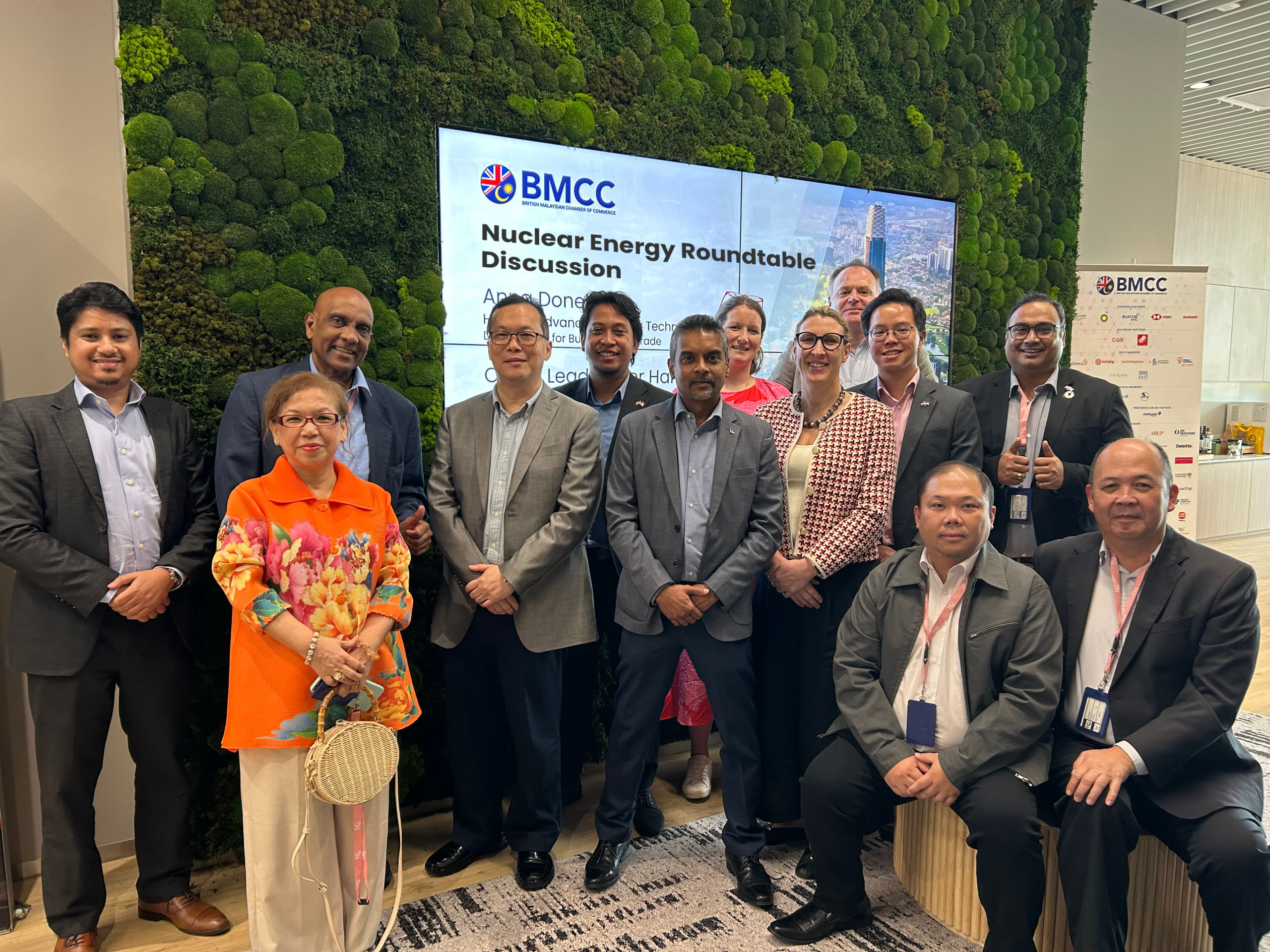
The Nuclear Energy Roundtable Discussion was convened in conjunction with the visit of Carrie Leadbeater-Hart, Nuclear Technical Specialist, and Anna Donnellan, Head of Advanced Nuclear Technologies, from the Department for Business and Trade (DBT), United Kingdom.
Objective
The session provided UK delegates with insights into Malaysia’s ambitions, policy direction, and industry readiness in nuclear energy — particularly from a business, trade, and investment perspective. The roundtable facilitated a candid exchange on regulatory preparedness, supply chain development, and opportunities for bilateral collaboration.
UK Nuclear Energy Developments
The UK delegation shared updates on the evolving nuclear landscape in the United Kingdom, highlighting:
-
A strategic transition towards Small Modular Reactors (SMRs).
-
The launch of a new Nuclear Framework outlining approvals processes and implementation pathways.
-
A national push to strengthen nuclear talent capacity, including reskilling oil and gas professionals, encouraging STEM pathways among students, and expanding advanced academic programmes in nuclear-related fields.
-
The UK’s mature and independent regulatory framework.
-
The importance of strong public-private collaboration, noting that successful nuclear development cannot be driven by government or industry alone.
Malaysia’s Nuclear Landscape
Members provided perspectives on Malaysia’s current progress and ambitions in nuclear energy. Key points included:
-
The need to enhance nuclear literacy nationwide, including greater awareness of SMRs and stronger legal, financial, and leadership capabilities in the sector.
-
The importance of establishing a clear regulatory framework and a resilient supply chain to support investor confidence and ensure commercial viability.
-
The sector’s evolution from traditionally government-led infrastructure projects to a high-growth, technology-driven space supported by public-private partnerships.
-
Malaysia’s nuclear aspirations as referenced under the 13th Malaysia Plan (RMK13).
-
Recommendations for the UK delegates to engage with relevant agencies such as PETRA, as well as Malaysia External Trade Development Corporation (MATRADE) and Ministry of Investment, Trade and Industry (MITI), which maintain databases of key manufacturing and construction players relevant to nuclear supply chain collaboration.
Collaboration & Next Steps
The discussion explored practical avenues for collaboration, including:
-
Supporting SME participation in the nuclear value chain and encouraging greater private sector involvement.
-
Leveraging existing nuclear-related programmes offered at Malaysian universities to strengthen talent pipelines.
-
The critical role of developing skilled engineers and project managers to sustain sector growth.
Participants collectively acknowledged nuclear energy’s importance as a low-carbon solution contributing to net-zero ambitions by 2050.
As a platform connecting UK and Malaysian businesses, BMCC remains committed to facilitating constructive dialogue, industry linkages, and knowledge-sharing in emerging sectors such as advanced nuclear technologies. We stand ready to support follow-up engagements, introductions to relevant stakeholders, and deeper collaboration between our members and UK partners as both countries explore responsible pathways towards energy security and sustainability.